
Could Your Sinus and Ear Symptoms Actually Be Migraine?
An ENT's Guide to Understanding the Hidden Cause of Sinus Pressure, Nasal Congestion, Ear Fullness, and Dizziness
When most people think of migraine, they think of a severe headache, nausea and dark rooms.
What they don't see is sinus pressure, nasal congestion, ear fullness, runny nose, facial swelling, or dizziness.
Yet these are some of the most common symptoms I see in my ENT clinic.
One of the biggest diagnostic challenges in ENT is that migraine can masquerade as diseases of the ears, nose, and throat. A review found that 75–88% of people who believe they have "sinus headaches" actually meet criteria for migraine, while only a small percentage have true sinus disease. (PMID 15364670)
This matters because the diagnosis determines the treatment.
If we're treating the wrong problem, it's no surprise that symptoms keep coming back.
When Migraine Looks Like a Sinus Problem
Migraine is a disorder of the nervous system, not just a headache problem.
During a migraine attack, nerve pathways can trigger symptoms that look remarkably similar to sinus disease, including:
Facial pressure or pain / sinus congestion
Nasal congestion
Runny nose
Eye watering
Facial swelling
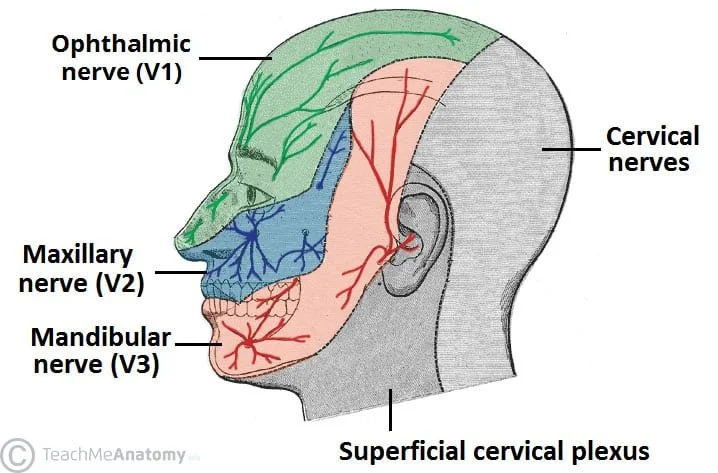
The reason migraine can be so confusing is that branches of the trigeminal nerve (cranial nerve V) provide sensation throughout the head and face, including the sinuses, ears, throat, jaw, and around the eyes.
During a migraine attack, activation of the trigeminal nerve can also trigger the autonomic nervous system, which controls functions like blood vessel dilation, mucus production, and tear formation.
This is one reason so many people are treated repeatedly with antibiotics despite having normal exams and sinus scans.
Unlike vestibular migraine, there are currently no universally accepted diagnostic criteria for sinonasal migraine. Instead, diagnosis relies on recognizing patterns and ruling out true sinus inflammation.
Red flags that migraine may be contributing include symptoms triggered by stress, poor sleep, weather/seasonal changes, menstruation, or symptoms that occur frequently and last a few days at a time.
When Migraine Affects the Ears
Some people with migraine experience:
Ear fullness
Tinnitus (ringing in the ears)
Sound sensitivity
Fluctuating hearing symptoms
Others develop vestibular migraine, the most common cause of episodic vertigo in women under age 60. (PMID 39109532)
Patients may have “room spinning” vertigo but also often describe feeling:
Dizzy or off balance
Like they're rocking or floating
Motion sickness
Heavy-headed
Sensitive to busy visual environments
The Bárány Society and International Headache Society have established diagnostic criteria for vestibular migraine that include recurrent vestibular episodes, a history of migraine, and migraine features during attacks.
In reality…not every patient fits neatly into these criteria.
Most experts agree that these are guidelines and helpful for research but careful history-taking and pattern recognition remains incredibly important.
The Good News: Migraine Is Treatable
Both vestibular migraine and sinonasal migraine are treated by helping the nervous system become less reactive to triggers.
The foundation often includes:
Consistent quality sleep
Steady hydration
Stable blood sugar
Regular movement
Stress management
Identifying personal triggers
Interestingly, sleep improvement is one of the strongest predictors of symptom improvement. (PMID 36225323)
Many also benefit from evidence-supported supplements such as magnesium, riboflavin (vitamin B2), CoQ10, and omega-3 fatty acids. (PMID 33972917)
Some patients require prescription medications to use as needed or preventatively, while others improve significantly through lifestyle changes and targeted supplementation.
Start at the beginning
If you've been treated over and over again for sinus infections, ear pressure, dizziness, or chronic congestion without meaningful improvement, it may be worth stepping back and asking a simple question:
Is the diagnosis truly explaining my symptoms?
Getting the diagnosis right is what guides treatment. When we identify the real cause, we can stop chasing symptoms and start making meaningful progress.
Whether your symptoms are caused by migraine, allergies, chronic sinusitis, recurrent infections, or a combination of several conditions, the foundations of airway health still matter.
That's why I created the Sinus Reset course…
It brings together the science of airway health, immune function, sleep, nutrition, environmental triggers, stress, and evidence-based complementary therapies into one practical framework. Most importantly, I guide you through it step by step.
It's the resource I wish my patients had a decade ago.
Since I can't personally work with everyone who finds me online, I created the next best thing: a step-by-step roadmap that brings together the science, clinical experience, and practical strategies I've developed over years of caring for patients with chronic sinus and airway concerns. It's information you simply won't find gathered together anywhere else - and guidance that goes far beyond what most people can realistically receive during a traditional office visit.
Relief starts with understanding what's actually driving your symptoms.
If you're tired of guessing, cycling through treatments, and wondering why your symptoms keep coming back, start here.
👉 Explore the Sinus Reset and take the first step toward lasting relief