
Complementary Approaches for Nasal Congestion
Few symptoms are as common—and as misunderstood—as nasal congestion.
When patients say they feel “congested,” they may be describing several different sensations: a blocked nose, facial pressure, thick mucus, postnasal drip, or even ear fullness. Research shows that patients often use the word congestion to describe multiple symptoms at once, while clinicians tend to think of congestion more specifically as nasal blockage caused by swollen tissue. (PMID 31145430)
Despite these different interpretations, there is often a common biological thread: inflamed nasal mucosa. When the lining of the nose becomes irritated—from allergies, viral infections, environmental triggers, or inflammation—blood vessels expand and fluid accumulates. This swelling narrows the nasal passages and creates the feeling of pressure, obstruction, or excess mucus that many people describe as congestion.
While medications are sometimes necessary, many people benefit from complementary strategies that help reduce inflammation, improve circulation, and support natural drainage.
Below are five simple approaches that can help.
1. SonuBand (Acoustic Vibration Therapy)

Newer technologies like SonuBand use targeted sound vibrations applied over the sinuses. The vibrations are thought to help loosen thick mucus and stimulate sinus drainage. This is my daughter’s favorite “add-on” when her allergic congestion acts up.
How to use it
Place the device over the frontal sinus (above the eyebrow).
Open the app and follow instructions for a personalized experience
Sessions last 15 minutes
Use 1–2 times daily, particularly during periods of congestion.
This type of therapy may be especially helpful when congestion is accompanied by thick mucus or sinus pressure. (PMID: 37812532)
Ready to try it for yourself? Use code SUENT199 for $100 off ! (Stanford University code-not an affiliate link)
2. Acupressure for Sinus Relief
Acupressure is a technique from traditional Chinese medicine that involves applying gentle pressure to specific points on the body to stimulate circulation and relieve symptoms. Certain facial points are commonly used to support sinus drainage and reduce nasal congestion. (PMID: 34922567)
Two helpful points include Yintang (EX-HN3) and Yingxiang (LI-20).
Repeat the sequence 1–2 times daily, especially when feeling sinus pressure or nasal blockage. The pressure should feel firm but comfortable—never painful.
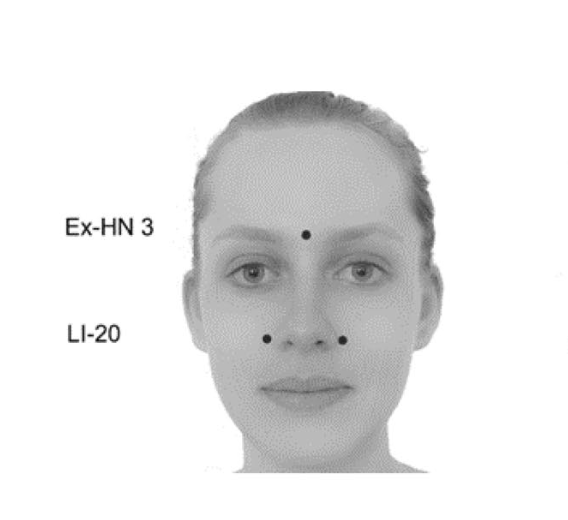
How to perform:
Yintang (EX-HN3)
Location: The point between the eyebrows, often called the “third eye.”
Use your index finger to apply gentle pressure to this spot.
Hold or massage in small circles for 30–60 seconds while breathing slowly.
Yingxiang (LI-20)
Location: On both sides of the nose, in the small grooves beside the nostrils.
Use your index fingers to press gently on both points at the same time.
Massage in small circular motions for 30–60 seconds.
3. Herbal Tea: Ground Ivy and Nettle
Traditional herbal medicine often uses plants that support respiratory health and reduce inflammation.
Ground ivy (Glechoma hederacea) has been used historically for sinus and respiratory congestion, while nettle (Urtica dioica) contains compounds that may help modulate inflammatory responses.
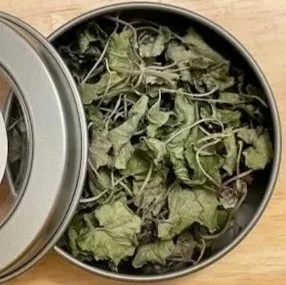
How to prepare
Add 1 teaspoon dried ground ivy
Add 1 teaspoon dried nettle leaf
Steep in 8–10 oz hot water for 10 minutes
Drink 1–2 cups daily
Herbal teas also promote hydration, which supports healthy mucus consistency. (PMID: 39861633; link)
Ground ivy (Glechoma hederacea) should be avoided by pregnant or breastfeeding individuals, those with kidney or liver disease, and people with epilepsy. It may trigger uterine contractions, cause toxicity, or irritate damaged kidneys.
Nettle leaf (stinging nettle) should generally be avoided by pregnant or breastfeeding individuals, as it may cause uterine contractions or interfere with hormones. It should also be avoided by people with kidney disease, those on blood thinners, blood pressure medication, or diabetes medication, due to potential interaction risks.
4. Red Light Therapy (Photobiomodulation)

Red light therapy, also called photobiomodulation, uses specific wavelengths of light to stimulate cellular activity and reduce inflammation. In studies examining nasal conditions, low-level red light delivered inside the nasal cavity has been shown to improve symptoms of allergic rhinitis by reducing inflammatory signaling and improving mucosal function. (PMID 39828891, 30647740)
How to use it
Devices like NoMore® designed for nasal use typically deliver low-level red light (around 630–660 nm) through small nasal probes.
Treatment sessions usually last about 3 minutes per nostril.
Most protocols recommend twice daily treatments for several weeks.
Some users notice gradual improvements in nasal airflow, itching, and congestion as inflammation in the nasal lining decreases.
Possible side effects
Red light therapy is generally well tolerated, but mild side effects can occur, including temporary nasal dryness, mild irritation or burning sensation, sneezing during treatment and rarely, minor nosebleeds.
People with frequent nosebleeds, nasal lesions, or those using photosensitizing medications should consult a healthcare professional before using these devices.
5. Ginger (Zingiber officinale)
Ginger is widely used as both a culinary spice and medicinal herb. Research suggests it has anti-inflammatory and anti-allergic properties that may help reduce nasal symptoms.
In a randomized clinical trial comparing ginger extract to loratadine for allergic rhinitis, participants taking ginger extract experienced significant improvements in nasal symptoms such as congestion, sneezing, runny nose, and itching. The improvement was similar to loratadine, and ginger was generally well tolerated with fewer side effects compared to the antihistamine.
Researchers believe compounds in ginger, including 6-gingerol and 6-shogaol, may help reduce inflammatory cytokines and allergic immune responses in the nasal mucosa. (PMID 32312261)

How to use it
Dose studied: 500 mg ginger extract daily
Typical schedule: divided into two doses per day
Duration studied: 6 weeks in clinical trials
Whole ginger root in food or tea may provide similar supportive benefits, although standardized extracts allow for more consistent dosing.
Possible side effects
Most side effects are mild and gastrointestinal including belching or reflux, stomach upset, and dry mouth or throat
Contraindications and cautions
Ginger should be used cautiously in people who:
Take blood-thinning medications or have bleeding disorders
Are preparing for surgery
Are pregnant (high doses should be discussed with a clinician)
The Bigger Picture
Because the word “congestion” can mean different things to different people, successful treatment often requires addressing the underlying drivers - whether that’s inflammation, mucus production, impaired drainage, or airway obstruction. It is always important to see your ENT or other medical provider to make sure you have identified the cause of the symptoms.
Complementary strategies like vibration therapy, acupressure, photobiomodulation and herbal support can work alongside conventional care to help restore comfort and improve nasal function.
If you’re ready for a more complete approach to chronic sinus symptoms, The Sinus Reset was designed to help you better understand the root drivers of inflammation, improve sinus health, and build a stronger foundation for long-term relief. Learn more about The Sinus Reset
Disclaimer:
This article is for educational purposes only and does not constitute medical advice. Individuals with persistent nasal congestion, severe symptoms, or underlying medical conditions should consult a qualified healthcare professional before starting new treatments, herbal remedies, or devices.